
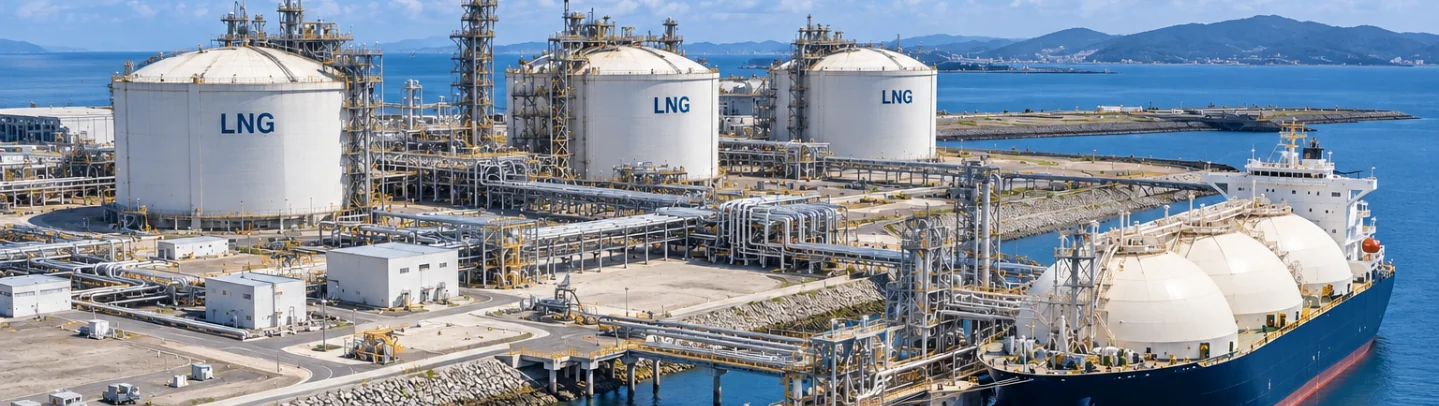

The Federal Energy Regulatory Commission (FERC) has proposed a blanket authorization program for certain modifications and expansions at existing liquefied natural gas (LNG) facilities. Issued October 15 in Docket No. RM26-2-001, the notice of proposed rulemaking (NOPR) would establish three authorization categories. They would cover activities at LNG terminals regulated under Section 3 of the Natural Gas Act (NGA) and LNG plants subject to Section 7.
The proposal comes as LNG operators continue to expand capacity and modify existing facilities. Under the proposed framework, certain work could proceed without a separate, case-specific authorization order. The available pathway would depend on the nature of the work, its effect on authorized capacity and the facility footprint, and compliance with FERC’s proposed conditions.
Three Paths for LNG Facility Work
FERC proposes three categories of blanket authorization, drawing in part on the Commission’s existing blanket certificate program for interstate natural gas pipelines.
Automatic authorization. Certain activities could proceed without advance Commission approval, subject to notification and reporting requirements. This category generally covers work that would not increase authorized capacity, expand the authorized vertical or horizontal limits of the facility within its footprint, or cause operating conditions to exceed applicable equipment design limits.
Sixty-day prior notice. Projects that increase authorized capacity but remain within the existing plant footprint could use a prior-notice process. The work could not cause operating conditions to exceed the design limits of affected or remaining facilities. The notice period would allow Commission staff and interested stakeholders to raise objections before the work proceeds.
Ninety-day prior notice. The proposal would cover certain new LNG facilities, including liquefaction trains, storage tanks and marine berths. Projects could extend beyond the existing plant footprint, subject to restrictions on facility type, location, size and design. Permanent occupation would be limited to 25 acres of previously disturbed or developed land or waterways in industrial zones or areas without zoning. Facilities and auxiliary systems would need to be of the same kind, or an upgraded design, as those previously evaluated and authorized for the plant or terminal.
Projects that do not satisfy the applicable criteria would continue to require case-specific authorization.
Implications for LNG Operators
LNG facilities require ongoing equipment replacement, reliability improvements and process modifications, alongside larger capacity expansions. A blanket authorization program could give operators a more direct route for some of this work, without requiring a separate Commission order for every qualifying project.
The 60-day category would be relevant to projects that increase authorized capacity within the existing plant footprint. The 90-day category could cover certain new facilities extending beyond existing boundaries, although the acreage and design restrictions would limit the projects eligible to use it.
Operators planning phased projects should assess the proposed work against their existing FERC authorizations, capacity limits and equipment design conditions. Classifying individual components may not resolve whether the overall project qualifies. Project teams will need to determine which category applies and whether the associated notice, environmental and other requirements can be satisfied.
Issues in the Rulemaking
FERC’s proposal follows a notice of inquiry seeking stakeholder input on blanket authorization for LNG facilities. The NOPR now sets out a proposed framework for comment.
Several aspects of the rulemaking warrant close attention.
Eligibility criteria. Authorized capacity, the plant footprint and equipment design limits determine which activities may qualify. Operators can identify recurring projects that would fall outside the proposed categories and explain why changes to the criteria may be warranted.
Notice and protests. The 60- and 90-day periods would give Commission staff and stakeholders an opportunity to object. The program’s practical value will depend partly on how FERC administers the notice procedures and handles objections. A blanket process may reduce the need for individual authorization orders. Operators would still need technically sound project descriptions and a process for addressing challenges that prevent work from proceeding.
Environmental and engineering requirements. FERC proposes standard conditions addressing environmental effects and engineering design, along with compliance requirements. These safeguards will be particularly important for new facilities and capacity increases. Blanket authorization would change the process for obtaining Commission approval, not eliminate otherwise applicable environmental, safety or permitting requirements.
Section 3 and Section 7 treatment. The proposed program would cover LNG export and import terminals regulated under Section 3 and LNG plants regulated under Section 7. FERC proposes different rate-treatment requirements for Section 7 projects, consistent with its pipeline blanket certificate framework. Operators should account for these statutory differences when evaluating the regulatory implications of a proposed project.
What LNG Operators Should Do Now
Operators should review planned modifications and expansion projects against the proposed criteria. Particular attention should go to projects that could increase authorized capacity, extend beyond the existing footprint or involve equipment operating near established design limits. This review can identify projects that may qualify for blanket authorization and those likely to require an individual application.
Companies should also assess whether their project-development procedures capture the information needed to establish eligibility, meet notification requirements and document compliance. For projects potentially falling within the 90-day category, the proposed acreage, location and facility-design restrictions deserve particular scrutiny.
Interested parties can also influence the final rule through comments grounded in practical experience. Examples of recurring project types, authorization delays and technical constraints would help FERC evaluate the proposed categories. Comments can also recommend safeguards or adjustments to the proposed requirements.
Comments are due 60 days after the NOPR is published in the Federal Register.
The proposal could establish a more structured authorization process for LNG facility modifications and selected expansions. Its practical effect will depend on the final eligibility criteria, the conditions imposed and how FERC handles objections. Those details will determine whether the program provides a dependable route for routine work while preserving individual review where warranted.
Beatty & Wozniak advises LNG operators and developers on FERC authorization, PHMSA compliance and federal permitting. Contact Ahuva Battams to discuss how the proposed rule could affect your facilities or to explore submitting comments to FERC.