
Practical Implications for Projects in Ozone Nonattainment Areas
By Bret Sumner, and Raj Lahoti
A recent Interior Board of Land Appeals (IBLA) decision vacating Bureau of Land Management’s (BLM) approval of a large scale federal natural gas development project in Wyoming addresses how Clean Air Act (CAA) general conformity analyses must account for emissions from mobile equipment in ozone nonattainment areas.
The decision does not expand when conformity applies nor does it affect BLM lease sales or routine individual application for permit to drill (APD) approvals. Its relevance is primarily limited to large, programmatic development projects where emissions are aggregated over many years and analyzed in a single environmental document. While the legal reasoning of the IBLA decision is questionable for not considering the comprehensive suite of air emission controls and mitigation measures voluntarily adopted and implemented by the project operator, this article focuses on what the decision states, the legal issues involved, and the legal framework applicable to this issue.
THE DECISION
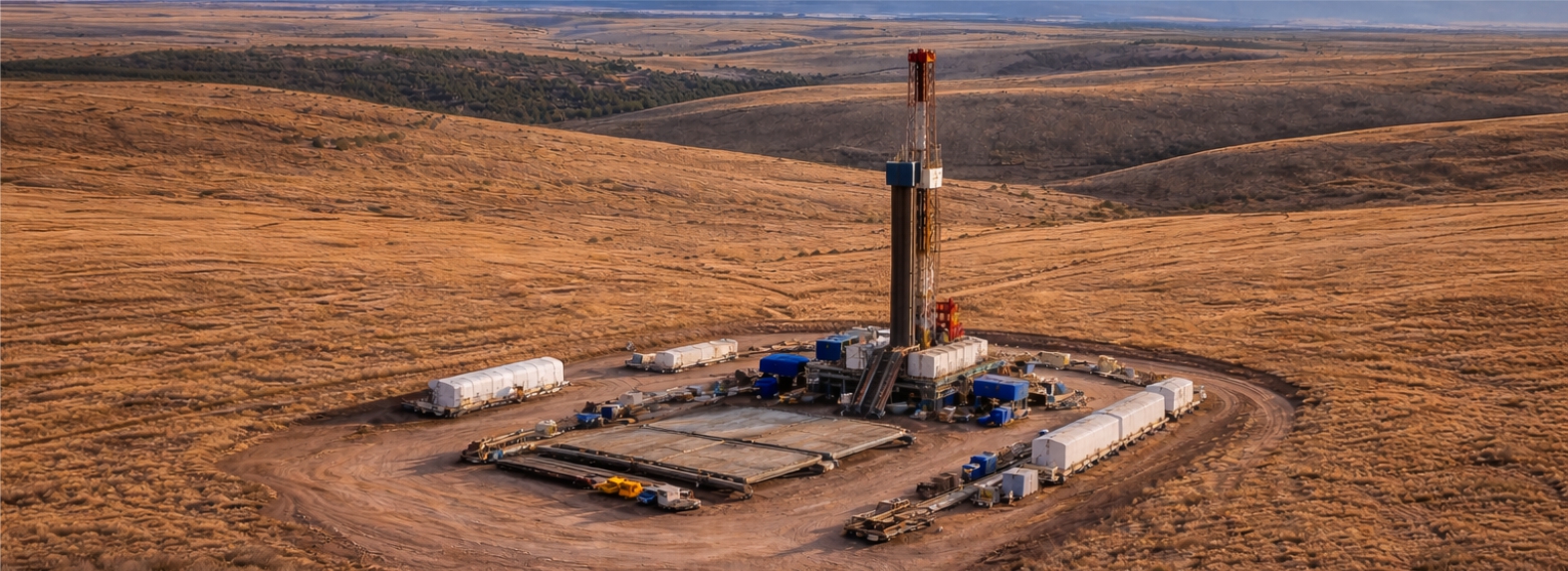
In 2011, Jonah Energy LLC proposed the Normally Pressurized Lance (NPL) Natural Gas Project on approximately 141,000 acres in Sublette County, Wyoming—predominantly federal land managed by BLM—to develop up to 3,500 natural gas wells over 10 years or 350 wells per year. The project area lies within the Upper Green River Basin, designated as nonattainment for the 2008 ozone standard.
In its August 2018 Record of Decision, BLM approved the NPL Project subject to a reduced pace of development of 160 wells per year. BLM calculated this specific limit to keep total emissions of ozone precursors (NOx and VOCs) below the applicable de minimis threshold, thereby attempting to avoid a formal conformity determination. Central to this calculation, BLM excluded emissions from Jonah Energy’s portable drill rig fleet from its analysis. BLM relied on the exemption in 40 C.F.R. § 93.153(d)(1) for emissions from stationary sources that require a permit under the New Source Review (NSR) program, as the drill rigs were authorized by a Wyoming NSR permit.
The IBLA rejected this exclusion, holding that drill rigs are not “stationary sources” under the CAA, and rendering the exemption inapplicable regardless of whether the fleet was subject to a state NSR permit. The IBLA further emphasized that a state NSR permit cannot substitute for or satisfy independent federal general conformity requirements. Accordingly, the IBLA vacated NPL Project’s Record of Decision, requiring the agency to conduct a revised conformity analysis that fully accounts for the portable drill rig fleet.
KEY TAKEAWAYS
- The decision is narrow but significant. It applies only to large project-level approvals in designated nonattainment areas. It does not expand conformity to new contexts but instead clarifies what emissions must be counted when conformity already applies.
- Federal lease sales remain unaffected. CAA conformity requirements do not apply to BLM’s programmatic decisions to offer lease parcels for competitive sale. Emissions at the leasing stage are speculative; conformity review occurs at subsequent project-level decisions.
- Individual APDs will not trigger conformity. Federal land development through small-scale Environmental Assessments and individual APD authorizations rarely approach the 100 tons per year de minimis threshold. The NPL Project—a programmatic Environmental Impact Statement (EIS) analyzed the development of 3,500 natural wells over the span of 10 years.
- Mobile source emissions must be counted—even if state-permitted. Wyoming’s NSR permitting program for mobile engines remains useful for controlling emissions, but it does not qualify those sources for the federal conformity exemption. The exemption at 40 C.F.R. § 93.153(d)(1) applies only to actual stationary sources.
LEGAL FRAMEWORK
Under the CAA, federal agencies may not approve actions that fail to conform to applicable State Implementation Plans (SIPs) in areas formally designated as nonattainment of CAA standards or maintenance areas. See 42 U.S.C. § 7506(c)(1); 40 C.F.R. § 93.150.
Scope of “Federal Action”: The general conformity rule applies to “any license, permit, activity, or action” by a federal agency. 40 C.F.R. § 93.150. This language mirrors NEPA’s definition of federal action, meaning conformity can theoretically attach at multiple decision points—from programmatic planning to individual permits.
Practical Trigger: Conformity applies only when an action’s total direct and indirect emissions in a nonattainment area exceed de minimis thresholds (e.g., 100 tons per year of NOx or VOCs for ozone nonattainment). Actions below these thresholds, or where emissions are not reasonably foreseeable, are exempt.
Excluded Actions: Certain categories are explicitly excluded, including “the portion of an action that includes major or minor new or modified stationary sources that require a permit” under the NSR/PSD programs. 40 C.F.R. § 93.153(d).
STRATEGIC CONSIDERATIONS
For operators planning development in nonattainment areas:
- Scale your NEPA approach carefully. Large programmatic EISs that aggregate emissions from hundreds of wells are more likely to trigger conformity than phased development through individual EAs and APDs.
- Account for all mobile source emissions. Include drill rigs, completion and frac engines, and other nonroad equipment in conformity calculations—even if they hold state permits.
- Consider pace-of-development restrictions. BLM reduced the NPL Project from 350 to 160 wells per year to stay below thresholds. Spreading development across years remains a viable mitigation strategy.
- Monitor evolving NEPA requirements. The IBLA noted that federal regulations requiring “cumulative impacts” analysis were rescinded in 2025, and agencies must now consider how changing judicial and regulatory interpretations affect greenhouse gas analyses for future decisions.
- Engage early with EPA and state agencies. EPA participated as a cooperating agency on the NPL Project’s EIS. Early coordination can help identify conformity issues before they derail a project.
The IBLA decision is significant yet narrowly tailored: general conformity requirements do not extend to lease sales or routine APDs. Further, emissions from mobile sources, such as drilling rigs and fracturing engines, cannot be excluded from conformity analyses merely because they are subject to voluntary state permitting process.
Operators planning large-scale, programmatic development in ozone nonattainment areas should ensure their NEPA documentation and conformity evaluations fully account for all direct and indirect emissions, including mobile and nonroad sources. The full decision, WildEarth Guardians, 201 IBLA 1 (Jan. 15, 2026), is available here.
For assistance with conformity determinations, air quality permitting strategies, or related NEPA compliance, please contact Bret Sumner, Chris Colclasure, or Raj Lahoti.